
Why Global Campuses Are the New Competitive Edge in Business Education

The prestige of a university has traditionally been closely tied to a single location. Oxford meant Oxford. Harvard meant Cambridge, Massachusetts. The Sorbonne meant Paris. Students travelled to these academic centres because that was where the institution – and its reputation – resided.
Today the landscape of higher education has changed. As businesses become increasingly international, universities are following suit. Leading institutions are expanding beyond their home countries to establish international campuses, creating what is often described as a “global campus” model. In an era where graduates are expected to navigate multicultural teams, global supply chains, and international markets, the global campus has become one of the most powerful competitive advantages in business education.
What Is a Global Campus?
A global campus is more than a branch office of a university. It is an integrated educational network that allows students, faculty, research initiatives, and industry partnerships to operate across multiple locations and countries.
Rather than viewing education through a single national lens, global campuses expose students to diverse business environments, regulatory systems, cultures, and economic realities. The goal is to prepare graduates for careers that increasingly transcend national borders.
Some of the world’s most respected institutions have embraced this model. The historic Sorbonne expanded its reach through Sorbonne University Abu Dhabi in the United Arab Emirates. Similarly, New York University established NYU Abu Dhabi, bringing the academic standards and global reputation of its New York campus to the Middle East. Other examples include the University of Nottingham in Malaysia and China, and Monash University in Malaysia.
These campuses are not simply recruitment centres. They are fully functioning academic institutions that offer degrees, conduct research, and foster international collaboration.
Why Universities Are Going Global
The rise of global campuses reflects broader changes in the world economy.
Businesses increasingly operate across continents. A marketing manager in Barcelona may work with colleagues in Singapore, suppliers in Vietnam, and clients in New York. Financial analysts monitor global markets around the clock. Entrepreneurs build businesses that can reach international customers from day one.
Universities have recognized that preparing students for this reality requires more than teaching international business theory. Students benefit from experiencing international environments first-hand.
Global campuses allow institutions to attract talented students from multiple regions, strengthen international research partnerships, and create closer relationships with multinational employers. At the same time, they provide students with opportunities that would be difficult to replicate on a single campus.
Does the Brand Travel?
One of the most common questions prospective students ask is whether a degree earned at an international campus carries the same value as one earned at the institution’s home campus.
In many cases, the answer is yes.
Global campuses are typically designed to maintain consistent academic standards, curricula, and quality assurance processes. Employers generally recognize the university brand rather than focusing exclusively on the physical location where the degree was completed.
A graduate of NYU Abu Dhabi, for example, benefits from the global recognition associated with the NYU name. Likewise, graduates of Sorbonne University Abu Dhabi are connected to the academic heritage and reputation of one of Europe’s oldest and most respected institutions.
That said, the value of any qualification ultimately depends on the quality of the education, the reputation of the institution, and the skills acquired by the student. Employers increasingly evaluate graduates based on a combination of academic credentials, practical experience, intercultural competence, and demonstrated capabilities.
In this regard, global campuses may provide an advantage because they offer students exposure to international experiences that traditional campuses cannot easily match.
The Student Advantage
The most obvious benefit of a global campus is mobility.
Students may have opportunities to transfer between campuses, spend semesters abroad, or participate in exchange programs within the university’s global network. This flexibility allows students to experience different cultures while maintaining continuity in their studies.
Studying in a new country can also provide valuable personal and professional growth. Living in a culturally diverse environment develops adaptability, resilience, and cross-cultural communication skills – qualities that employers increasingly seek in future leaders.
Exposure to visiting faculty is another major advantage. Global campuses often attract professors and industry experts from multiple countries, providing students with access to diverse perspectives and international expertise. A finance professor from London, a marketing specialist from New York, and an entrepreneur from Dubai may all contribute to a student’s educational experience.
Beyond the classroom, global campuses frequently maintain extensive partnerships with local industries and multinational corporations. These relationships can create opportunities for internships, consulting projects, networking events, and employment pathways across multiple markets.
Learning Through Cultural Immersion
Perhaps the greatest strength of a global campus lies in cultural immersion.
Business schools have long emphasized the importance of understanding global markets. Yet there is a significant difference between reading about cultural differences and experiencing them first-hand.
Students studying abroad encounter different business norms, communication styles, consumer behaviours, and leadership approaches. They learn how business decisions are shaped by cultural and regulatory contexts. These insights are difficult to teach through textbooks alone.
In a world where successful managers must lead increasingly diverse teams, this kind of experiential learning has become an essential component of business education.
The European Perspective
Europe has long been a natural environment for international education. Students regularly cross borders for study and employment, and businesses operate within one of the world’s most interconnected economic regions.
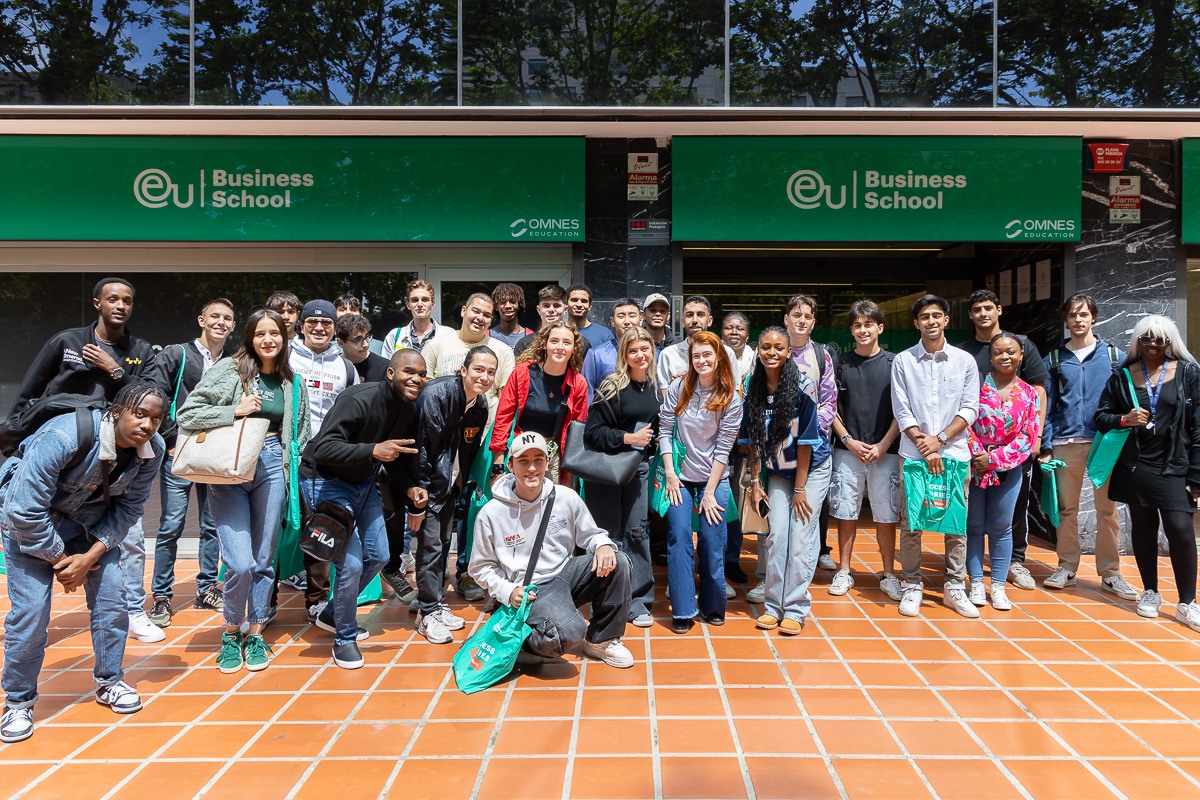
This has encouraged institutions such as EU Business School to adopt a distinctly international approach. With campuses in Barcelona, Geneva, and Munich, EU Business School offers students the opportunity to experience different European business environments while studying within a unified academic framework.

Its international student body, globally focused curriculum, and partnerships with institutions around the world reflect the broader shift toward globalized business education. Students gain exposure not only to multiple cultures and languages but also to diverse perspectives on entrepreneurship, innovation, leadership, and international commerce.

The Future of Business Education
The global campus model responds directly to employers’ demands for graduates who can navigate complexity, collaborate across cultures, and operate confidently in global markets. It transforms international education from a short-term study-abroad experience into an integrated part of the learning journey.
For business students, a university’s global footprint is no longer simply a marketing advantage. It is increasingly a measure of how effectively an institution prepares graduates for the realities of twenty-first-century business leadership.