5 Things No One Tells You About Studying at an International Business School in Spain

Spain has quietly become one of Europe’s most attractive destinations for international business students. Cities like Barcelona and Madrid now host a dense concentration of internationally accredited business schools, startup hubs, and multinational employers. While glossy brochures tend to focus on beaches, sunshine, and tapas, the reality of studying business in Spain is richer – and more complex – than many students expect.
1. You’ll Study Business in English – But Live in Another Language
One of Spain’s biggest attractions for international students is that many business programs are taught entirely in English. EU Business School Barcelona offers bachelor’s, master’s, and MBA programs designed for a global classroom, with students representing dozens of nationalities.
What’s less often mentioned is that once you leave the classroom, Spanish (and in regions like Catalonia, Catalan) becomes unavoidable. While it’s possible to get by in major cities with English, everyday experiences – administration offices, housing contracts, healthcare, internships – may require at least basic Spanish.
This dual-language reality turns out to be a hidden advantage. Many graduates leave Spain not only with a business degree, but with functional multilingual skills that are increasingly valued by employers operating across Europe, Latin America, and Africa.

2. Spain’s Business Culture Is Different – and That’s the Point
Students often arrive expecting a business environment similar to the UK, Germany, or the US. Instead, Spain offers a distinct professional culture that blends relationship-building, adaptability, and long-term thinking.
Meetings may feel less rigid, networking is often more personal, and trust plays a significant role in business dealings. This can be frustrating at first for students used to fast, transactional environments – but it’s also deeply educational.
Studying business in Spain exposes students to Mediterranean, European Union, and Latin-rooted business norms simultaneously. For anyone planning an international career, learning to navigate cultural nuance becomes as important as mastering finance or strategy frameworks.
3. The Cost/Quality Ratio Is Better Than You Expect
Compared to destinations like the US, UK, or Switzerland, Spain offers relatively affordable tuition and living costs – especially outside the very top tier of global cities. Rent, transport, food, and healthcare are generally accessible on a student budget, while the quality of life remains high.
What’s less obvious is that international business schools like EU Business School maintain strong links with global employers, startups, and entrepreneurship ecosystems. As an example, Barcelona consistently ranks among Europe’s leading startup hubs, particularly in tech, digital marketing, fintech, and sustainability.
Students often underestimate how much hands-on exposure they’ll gain through guest lectures, company visits, incubators, and internships embedded into their programs.

4. The Classroom Is More International Than You Might Be
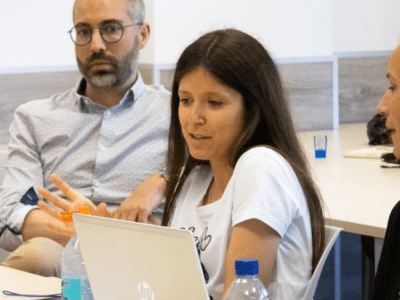
Another surprise for many students is that studying in Spain doesn’t necessarily mean studying with mostly Spanish classmates. International business schools in Spain often have student bodies where no single nationality dominates. Regularly voted as the best student city in Spain, the three EU Business School Barcelona campuses boast 130+ nationalities.

This creates a learning environment that mirrors multinational workplaces. Group projects, presentations, and case studies frequently involve negotiating different communication styles, academic expectations, and leadership approaches.
While this diversity can make teamwork more challenging, it also accelerates the development of soft skills – cross-cultural communication, conflict resolution, adaptability – that recruiters consistently rank among the most valuable graduate attributes.
5. A Business Degree Isn’t the Only Route – and Spain Makes That Clear
One of the most important things no one tells you is that studying business in Spain often broadens your view of what a “business career” actually looks like.
Alongside traditional degrees, students are exposed to alternative pathways such as:
- Entrepreneurship and startup incubation, often supported by city-level innovation programs
- Professional certifications in areas like digital marketing, project management, data analytics, or finance
- Family business succession, particularly relevant in Spain’s SME-driven economy
- Intrapreneurship, where graduates innovate within established organizations.
Spain’s entrepreneurial ecosystem makes it clear that while a business degree is a powerful foundation, it is not the only route into leadership, management, or enterprise. Many successful professionals combine formal education with certifications, real-world experience, and venture-building.
Are There Any Drawbacks?
No destination is perfect. Bureaucracy in Spain can be slow, especially for visas and residence permits. Internships may be less structured than in some northern European countries, and salaries – particularly early-career – tend to be lower than in markets like Germany or the US.
However, many students find these challenges are balanced by lifestyle, professional exposure, and long-term mobility within Europe and beyond.
Final Thoughts
Studying at an international business school in Spain is an immersion into a multilingual, multicultural, and entrepreneurial environment that prepares students for global careers in ways that are difficult to replicate elsewhere.
The sunshine and culture may attract you, but the real value lies in what Spain teaches you about business, people, and yourself.