The Future of Higher Education: Key Trends Reshaping How We Learn

Until well into the twentieth century, higher education followed a remarkably stable model. Students travelled to a campus, attended lectures delivered by subject experts, completed assessments, and graduated with a qualification that signalled competence to employers. While technology has gradually altered parts of this process (overhead projectors gave way to smartboards!), the fundamental structure remained largely unchanged.
But more recently, higher education is undergoing one of the most significant transformations in its history. Artificial intelligence may dominate headlines, but it is only one of several forces reshaping how knowledge is created, delivered, assessed, and applied. The future university is likely to look very different from the institutions most graduates experienced even a decade ago.
Learning Is Becoming Continuous Rather Than Sequential
Education used to be viewed as a sequence: school, university, employment. This model is being replaced by lifelong learning.
Rapid technological change means professional knowledge becomes outdated faster than ever. Graduates entering the workforce will likely need to reskill multiple times throughout their careers. To meet this challenge, universities are evolving from institutions that educate students for three or four years into partners that support learners throughout their professional lives.
This shift is driving demand for “stackable credentials”, executive education, short courses, and specialized certificates that can be completed alongside employment. The future learner may accumulate educational experiences over decades rather than pursuing a single degree at the beginning of adulthood.
The Classroom Is Becoming Borderless
Online learning is no longer just a second-choice substitute for physical attendance. It is becoming a sophisticated global learning ecosystem.
Students increasingly expect access to international faculty, global peer networks, virtual simulations, and collaborative projects regardless of their location. The question is no longer whether learning occurs online or on campus. Instead, institutions are exploring how physical and digital experiences can complement one another.
Hybrid delivery models allow students to participate in discussions, projects, and networking opportunities across multiple countries and time zones. This global connectivity exposes learners to diverse perspectives and mirrors the increasingly international nature of modern business.
EU Business School exemplifies this trend through its campuses in Barcelona, Geneva, Munich, and Online, with flexible learning pathways that allow students to engage with an international academic community while maintaining geographical mobility.

AI Is Transforming Assessment
Much discussion about AI focuses on students using tools such as ChatGPT. A more profound transformation may be occurring in how universities assess learning.
If AI can generate competent essays, traditional assignments become less useful as measures of student ability. Consequently, institutions are moving toward assessments that prioritize judgment, creativity, problem-solving, leadership, and real-world application.
The future examination may resemble a consulting project, a strategic simulation, or a live business challenge rather than a written test. Students will increasingly be evaluated on their ability to ask the right questions, interpret complex information, collaborate effectively, and make sound decisions.
Ironically, AI may accelerate a return to more human-centred forms of assessment.
The Rise of Immersive Learning
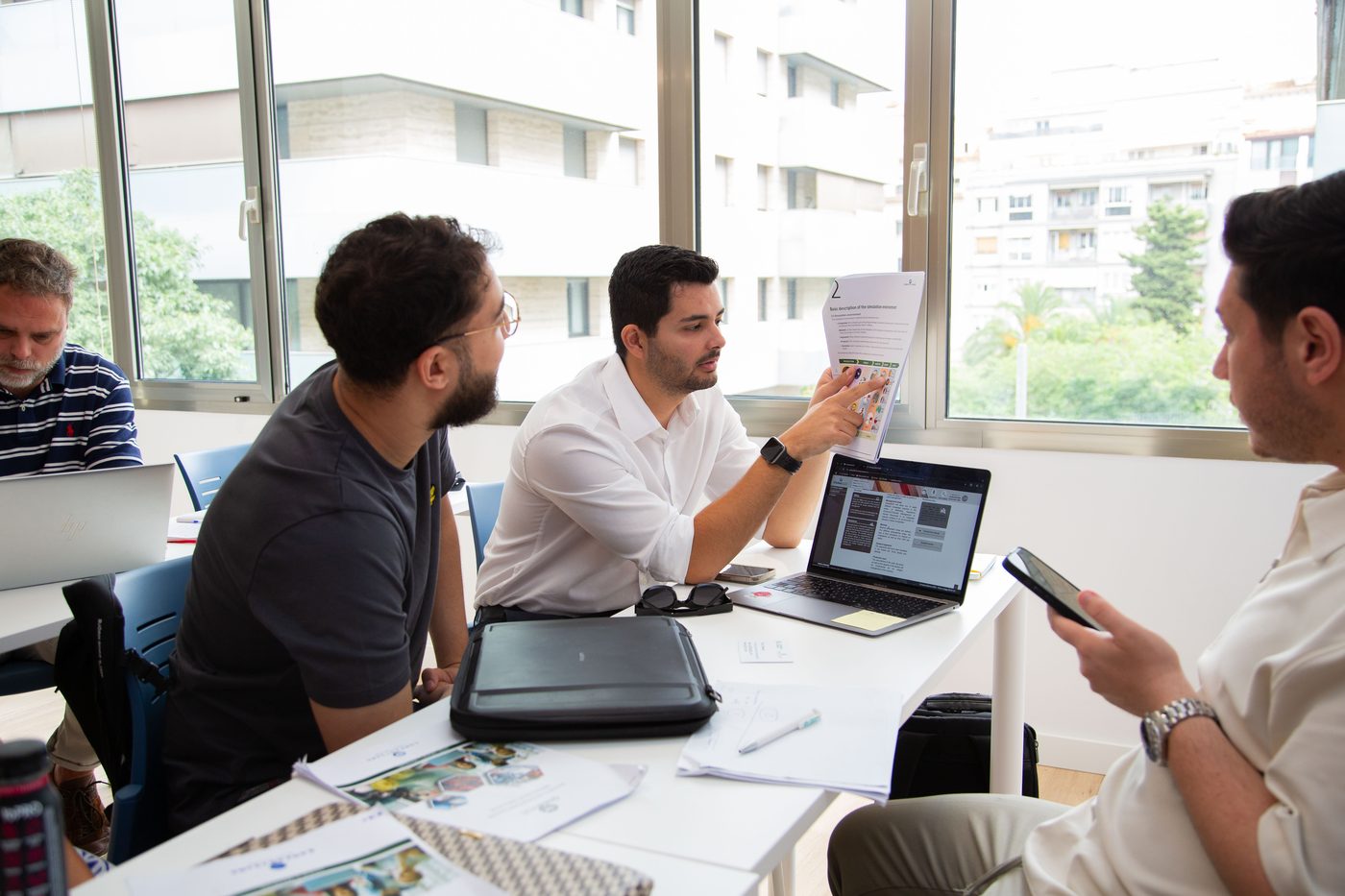
Advances in virtual reality, augmented reality, and digital simulation technologies allow students to practise skills in realistic environments before applying them professionally. Future business students may negotiate mergers, manage crises, launch products, or lead multinational teams within sophisticated virtual environments.
These technologies offer safe spaces for experimentation, allowing learners to experience the consequences of decisions without real-world risks. Learning becomes less theoretical and more experiential.
This concept is not new. The Harvard Case Method, for example, has been widely used as a teaching method since the late 19th century.
For management education, in particular, this shift significantly narrows the gap between classroom learning and workplace practice.

Knowledge Is Becoming More Interdisciplinary
Many of today’s most significant challenges do not fit neatly within traditional academic disciplines.
Climate change, cybersecurity, artificial intelligence governance, digital transformation, and global supply-chain resilience require expertise that spans multiple fields. Universities are increasingly responding by designing programmes that integrate business, technology, data science, ethics, sustainability, and social sciences.
Future graduates will need to understand how complex systems interact rather than simply mastering isolated bodies of knowledge.
This trend is particularly visible in emerging programmes focused on Artificial Intelligence for Business, digital transformation, and technology management, where technical understanding must be combined with leadership and strategic thinking.
Universities Are Becoming Innovation Ecosystems
The future university may function less as a knowledge repository and more as an innovation hub. Students increasingly expect opportunities to work on start-up ventures, industry projects, entrepreneurial initiatives, and collaborative research. Employers similarly seek graduates who can solve problems rather than merely recall information.
Business schools are therefore building stronger partnerships with industry, creating incubators, supporting entrepreneurship, and facilitating direct engagement with business leaders.
The result is a learning environment where education, innovation, and professional practice become closely integrated.
Human Skills Become More Valuable
Paradoxically, the more sophisticated technology becomes, the more valuable distinctly human capabilities may become.
Technical knowledge remains important, but employers increasingly value skills such as leadership, emotional intelligence, ethical reasoning, communication, adaptability, and strategic judgment. These are areas where human capabilities continue to complement rather than compete with intelligent systems.
The future of higher education is therefore not about replacing people with technology. It is about preparing graduates to work effectively alongside increasingly powerful technologies while retaining the uniquely human qualities that drive innovation, trust, and leadership.
The Future University
Higher education is entering a period of profound reinvention. Lifelong learning, hybrid delivery, immersive technologies, interdisciplinary programmes, industry integration, and new assessment models are reshaping the educational landscape.
EU Business School exemplifies many of these developments through their international campuses, globally diverse student body, industry-focused programmes, and growing emphasis on technology, entrepreneurship, and business innovation.
The university of the future will not simply teach students what to know. It will help them continuously learn, adapt, collaborate, and lead in a world where change is the defining feature of professional life.