
Discussions about the future of higher education have trended around a familiar theme: artificial intelligence is transforming education. But focusing exclusively on AI risks missing a larger story. The most significant changes facing universities over the next decade may not be technological at all. They may be structural, economic and philosophical, forcing institutions to rethink not just how they teach, but why they exist.
Business schools sit at the centre of these changes because they educate the leaders, entrepreneurs and innovators who must navigate increasingly uncertain futures. EU Business School, with its international campuses, flexible learning models and strong focus on practical business leadership, already demonstrates many of the characteristics that may define the next generation of higher education.

Will Universities Eventually Stop Awarding Degrees?
Degrees have always served as the primary currency of educational achievement. But employers are increasingly interested in what candidates can actually do rather than which qualification they possess.
Technology companies, consulting firms and start-ups increasingly recruit on the basis of portfolios, demonstrated competencies and verified skills. Professional platforms now allow individuals to showcase projects, certifications and real-world accomplishments in ways that were impossible a decade ago.
The future graduate may therefore accumulate a dynamic portfolio of skills rather than a single degree certificate. Universities may become validators of capability rather than issuers of credentials.
Is the Lecture Becoming Obsolete?
The traditional lecture emerged in an era when access to knowledge was scarce. Today, information is abundant.
When a student can watch world-class explanations online at any time, the value of gathering hundreds of people in a room to hear information delivered one-way becomes less obvious. The professor’s role may increasingly shift from content delivery toward coaching, mentoring and facilitating discussion.
Classroom time then becomes focused on debate, problem-solving and application rather than passive listening. The most valuable educators may not be those who know the most, but those who can help students think most effectively.
Will Students Have AI Learning Twins?
Imagine every student possessing a personalized AI system that understands their strengths, weaknesses, career ambitions, learning preferences and professional history. Rather than starting from scratch with each new course or qualification, the student’s “learning twin” continuously evolves alongside them.
Such systems could recommend learning opportunities, identify skill gaps, suggest career pathways and provide personalized coaching over an entire lifetime. Education then becomes a continuously updated relationship between learner, institution and intelligent technology.
Are Universities Preparing Students for Jobs – or for Uncertainty?
Higher education used to prepare students for relatively stable career pathways. Increasingly, many future jobs have not yet been invented. This raises a fundamental question: should universities focus on teaching specific knowledge, or on cultivating adaptability?
In reinventing ourselves, capabilities such as critical thinking, resilience, interdisciplinary problem-solving, ethical judgement and entrepreneurial thinking may become more valuable than mastery of any single technical skill.
Could Campus Life Become a Luxury Experience?
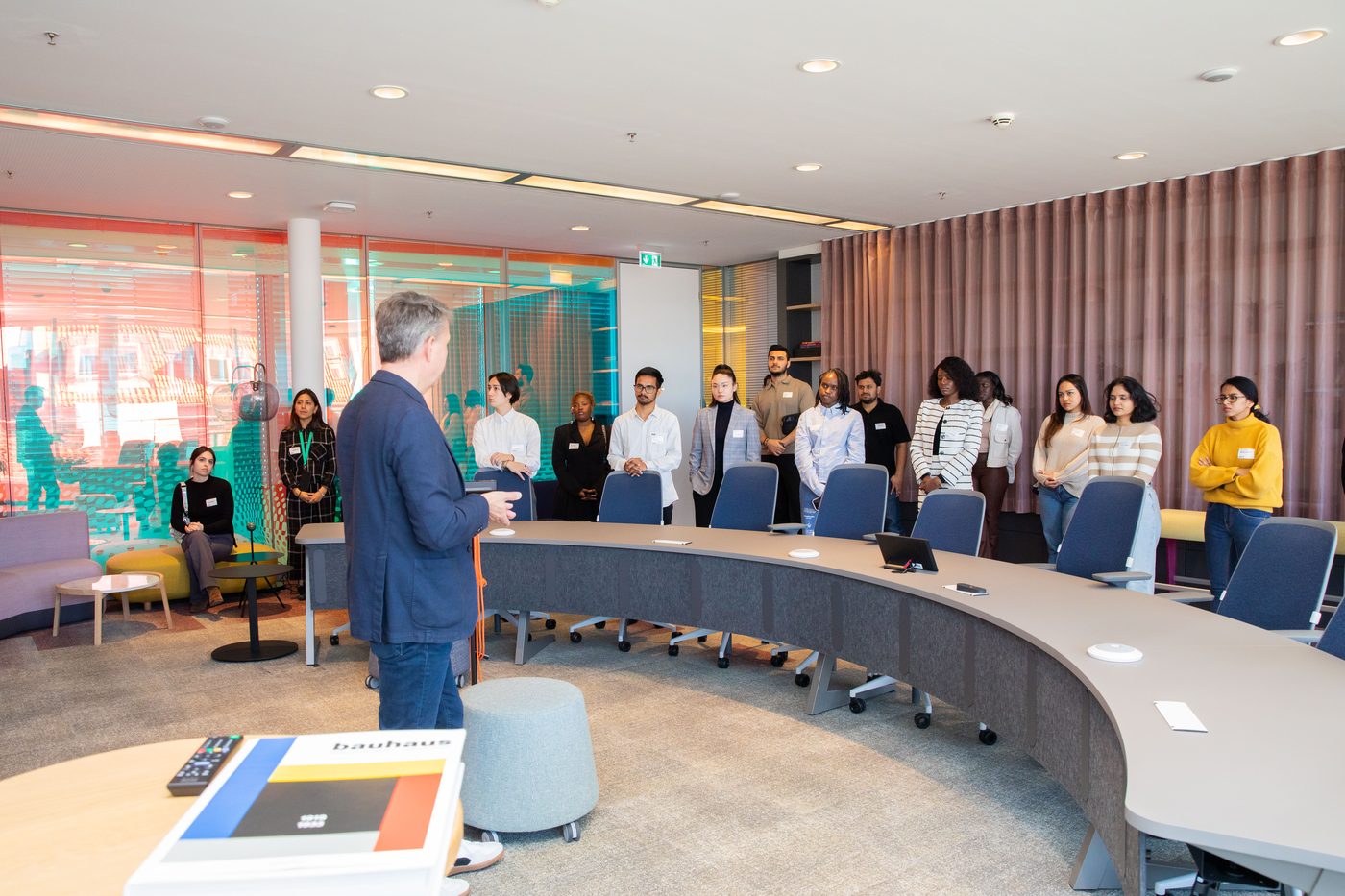
As educational content becomes universally available online, physical campuses face a challenge: what unique value do they provide? The answer may lie not in information but in experience.
Future campuses could increasingly differentiate themselves through networking opportunities, mentorship relationships, international exposure, leadership development, experiential learning and access to entrepreneurial ecosystems. Students may choose campuses not because that is where knowledge resides, but because that is where valuable relationships are formed.
EU Business School already emphasizes international mobility, multicultural cohorts and strong industry connections – qualities that may become more important than traditional classroom instruction.
What If Employers Become Universities?
The boundary between education and employment is starting to blur. Major corporations already operate sophisticated internal learning academies, leadership programmes and digital training platforms. Some technology companies train employees more rapidly and more effectively than traditional educational institutions.
As skills evolve faster than academic curricula can be updated, employers may increasingly become providers of professional education themselves. Universities and corporations may move from being separate institutions to becoming strategic partners – or competitors.
Will AI Make Exams Disappear?
If generative AI can instantly produce essays, reports and solutions, traditional examinations may lose much of their value as measures of competence.
Future assessment models may emphasize live performance, simulations, collaborative projects, entrepreneurial challenges, presentations and practical demonstrations. Rather than asking students what they know, institutions may increasingly evaluate what students can create, solve and lead.
Is “Majoring” in a Single Subject Becoming Outdated?
The modern economy increasingly rewards individuals who can connect expertise across multiple domains.
Many of today’s fastest-growing opportunities emerge at the intersections of business, technology, psychology, sustainability, design and data science. Yet traditional degree structures often separate these disciplines – the so-called “silo effect”.
Future learners may construct highly customized educational pathways that combine multiple fields according to personal interests and career objectives, building unique combinations of competencies tailored to emerging opportunities – hybrid expertise.
Could Learning Become Subscription-Based?
The traditional higher education model assumes that learning occurs intensively for a few years and then largely stops. That assumption is becoming increasingly difficult to defend.
Many universities may evolve toward subscription-based relationships, providing continuous access to courses, certifications, industry updates, coaching and professional development throughout a graduate’s career.
Rather than paying once for a degree, learners may maintain lifelong memberships that allow them to continuously refresh their skills as industries evolve.
Will Universities Predict Success Before Students Can?
The rise of learning analytics may enable the analysis of behavioural patterns, engagement levels, collaboration habits and learning performance. Institutions may increasingly identify future leaders, entrepreneurs or at-risk students long before traditional assessments reveal these outcomes.
Such predictive capabilities could enable highly personalized interventions, helping struggling students earlier while identifying exceptional talent more accurately.
The challenge will be balancing opportunity with ethics. Universities must ensure that predictive systems empower learners rather than confine them to algorithmic expectations.
The Real Future of Higher Education
The future of higher education is about reimagining the purpose of universities in a world where information is abundant, careers are fluid and learning never truly ends.
The institutions that thrive will be those willing to move beyond the industrial-age model of degrees, lectures and examinations toward a future built around adaptability, lifelong learning, interdisciplinary thinking and human connection.
The real challenge is whether universities can transform themselves quickly enough.